SEMPAYA HOT SPRINGS
Sempaya Hot Springs
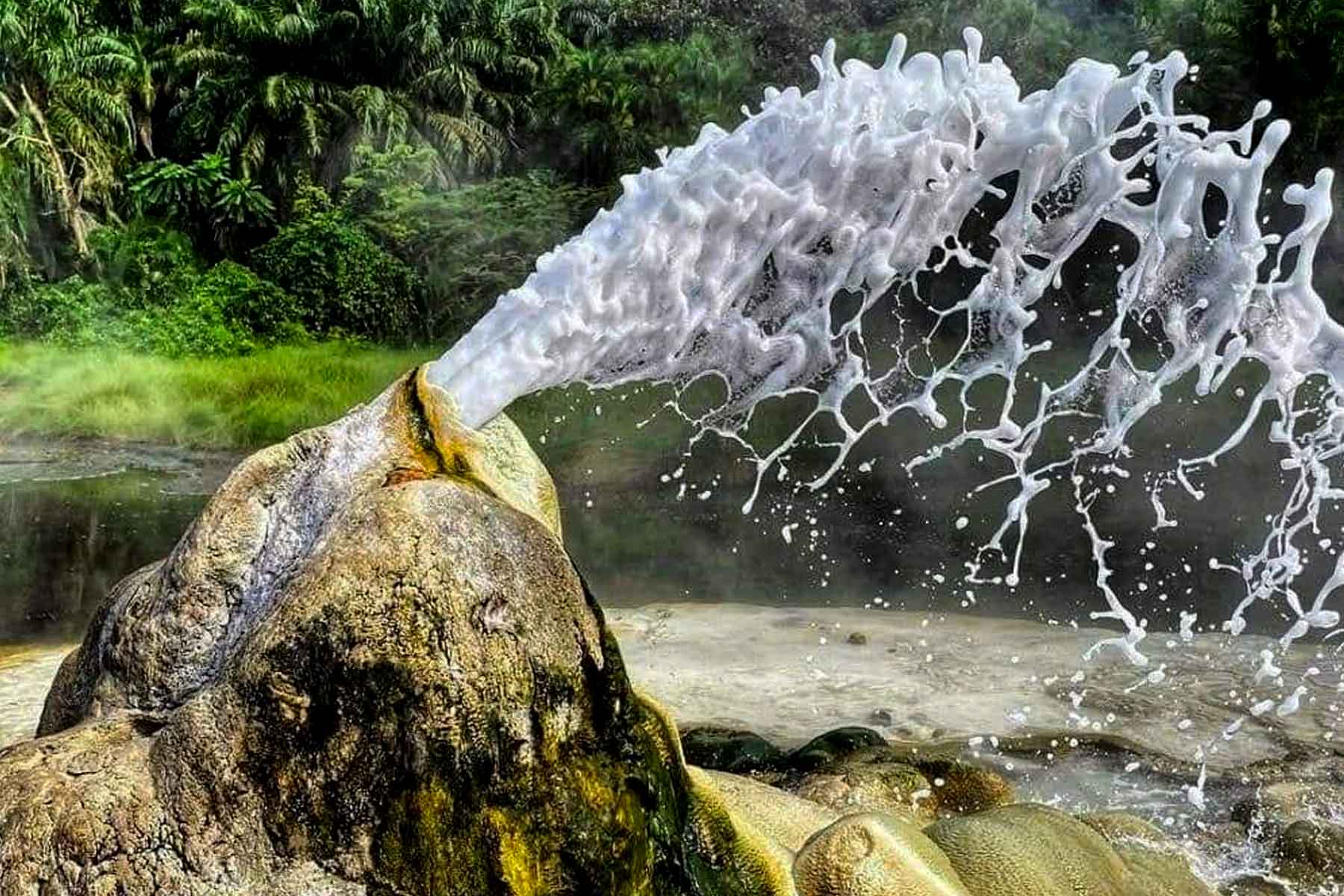
Sempaya Hot Springs are geothermal springs located in Semuliki National Park, within Bundibugyo District in western Uganda near the border with the Democratic Republic of the Congo. Renowned for their boiling geysers and cultural legends, the springs are among Uganda’s most striking natural and spiritual attractions.
Key facts
- Location: Semuliki National Park, Bundibugyo District, Uganda
- Temperature: Up to 103 °C (217 °F)
- Type: Geothermal hot springs (male and female)
- Nearest town: Fort Portal (≈ 52 km)
- Altitude: ~670–760 m above sea level
Geology and formation
These springs emerge from geothermal activity linked to the western arm of the East African Rift Valley. Groundwater percolates deep into the Earth’s crust, is superheated by magma, and re-emerges under pressure as boiling geysers. The “female” spring (Nyasimbi) shoots steaming water up to two meters high, while the “male” spring (Bintente) forms a wide, bubbling pool about 12 m across. Both demonstrate the intense subterranean heat shaping the Semuliki Valley landscape.
Cultural significance
Local Bakonjo and Bamaga communities attribute sacred power to the springs. Nyasimbi is associated with female fertility and healing, while Bintente symbolizes masculine prosperity. Ritual bathing, offerings, and ancestral prayers are common, reflecting deep spiritual ties. Folklore recounts that the two springs represent a mythical married couple who disappeared into the forest and reemerged as these natural features.
Ecology and tourism


5
The springs lie within dense lowland rainforest, home to over 400 bird species and numerous primates such as red-tailed, black-and-white colobus, and grey-cheeked mangabey monkeys. Guided trails—about 30 minutes to Nyasimbi and an hour to Bintente—offer opportunities for birding, wildlife viewing, and photography. Visitors often cook eggs or matooke in the boiling water, a popular experiential highlight.
Visitor information
Sempaya Hot Springs are accessible year-round via the scenic Fort Portal–Bundibugyo road. The dry seasons (December–February and June–August) provide the best hiking conditions. The site forms part of Uganda’s western safari circuit, often paired with Toro-Semliki Wildlife Reserve, Kibale National Park, and Queen Elizabeth National Park.