MARAFA HELL’S KITCHEN
Marafa Hell’s Kitchen
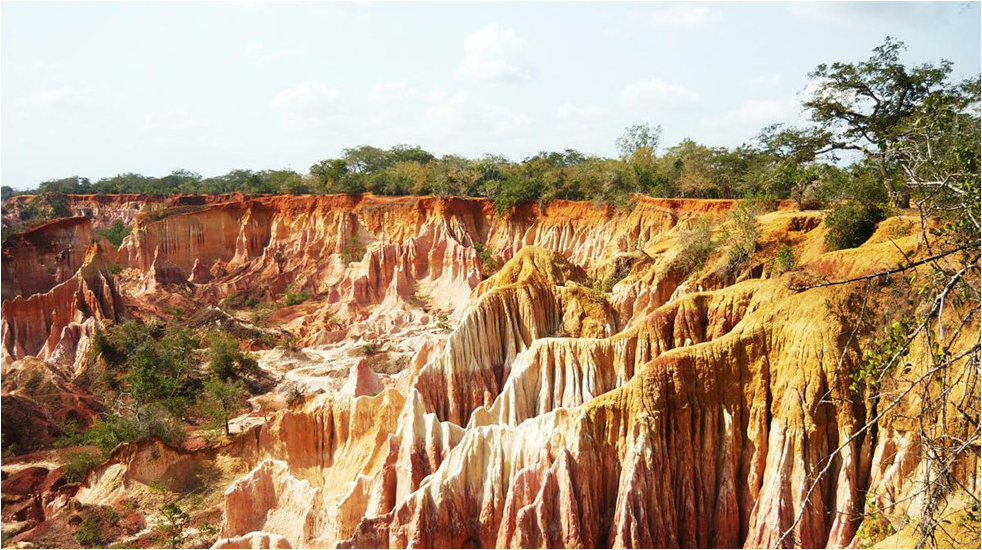
Marafa Hell’s Kitchen, located in Kilifi County near Malindi, is one of Kenya’s most striking and lesser-known natural attractions. Despite its dramatic name, it is not a place of fire or heat, but rather a sandstone canyon shaped over thousands of years by erosion, wind, and rain. The site is locally known as “Nyari,” and its landscape consists of jagged gullies, steep cliffs, and layered rock formations that display a stunning range of colors—from deep reds and oranges to whites and soft pinks.
The name “Hell’s Kitchen” comes from both its intense midday heat and local legends. According to Giriama folklore, the area was once a prosperous town that was destroyed as punishment for moral decay, leaving behind the rugged terrain seen today. This blend of natural science and storytelling gives the site a unique cultural and mythical dimension that enriches the visitor experience.
Visitor Experience
Many visitors describe their trip to Marafa Hell’s Kitchen as both surreal and memorable. One of the most commonly praised aspects is the transformation of the landscape during sunset. As the sun lowers, the canyon walls reflect changing hues, creating a vivid display of natural color that photographers and travelers often find breathtaking. The shifting light gives the illusion that the earth itself is glowing.
Guided tours are a key part of the experience. Local guides walk visitors through the canyon, explaining the geological processes that formed the site as well as the cultural stories attached to it. Travelers often appreciate this combination of science and oral tradition, noting that it adds depth to what might otherwise be seen as just a scenic location.
However, some visitors point out challenges. The heat can be intense, especially during the day, and the terrain is uneven, requiring comfortable walking shoes and some physical effort. Facilities in the area are relatively basic compared to more developed tourist destinations, which can be a drawback for those expecting modern amenities. Still, many travelers feel that the raw, untouched nature of the site is part of its charm.
Analysis
Marafa Hell’s Kitchen stands out as a powerful example of how natural landscapes can be both visually captivating and culturally meaningful. Its main strength lies in its uniqueness—few places in Kenya, or even East Africa, offer such a dramatic desert-like canyon environment. This makes it an important addition to Kenya’s tourism portfolio, which is often dominated by savannah wildlife and coastal beaches.
From a tourism development perspective, the site presents both opportunities and challenges. On one hand, its growing popularity can boost local economies by creating jobs for guides and small businesses. On the other hand, increased visitor numbers may threaten the fragile environment if not properly managed. Sustainable tourism practices, such as controlled access and community involvement, are essential to preserving the site.
Culturally, the integration of local folklore into the visitor experience is a strong point. It ensures that tourism benefits not just the economy but also the preservation of indigenous knowledge and storytelling traditions. However, there is room for further development in terms of interpretive materials and infrastructure that can enhance understanding without commercializing the site excessively.
Conclusion
Marafa Hell’s Kitchen is a destination that combines natural beauty, cultural storytelling, and a sense of adventure. While it may lack the polished facilities of more mainstream tourist spots, it offers something arguably more valuable—an authentic and immersive experience.
For those willing to venture off the beaten path, it provides a rare glimpse into a different side of Kenya’s landscape. With thoughtful conservation and sustainable tourism efforts, Marafa Hell’s Kitchen has the potential to remain both a hidden gem and a meaningful cultural landmark for generations to come.